
Refinancing Right Now? Run the Numbers First
A half-point rate drop sounds like free money, but the math behind refinancing is messier than most lenders let on.
The Break-Even Point Nobody Mentions at Closing
When rates ticked down slightly this spring, refinance applications jumped. Homeowners saw a lower monthly payment and stopped reading. The number they missed was the break-even point, the month when cumulative savings finally exceed the closing costs they paid upfront.
Closing costs on a refinance typically run 2% to 5% of the loan balance. On a $320,000 remaining balance, that is $6,400 to $16,000 out of pocket. If your new payment saves you $180 per month, you need at least 36 months just to recover a $6,400 cost. Move before then and you lose money, full stop.
How Resetting the Amortization Clock Can Cost You More
Here is the part that catches people off guard. If you are five years into a 30-year mortgage and you refinance into another 30-year loan, you are not just getting a lower rate. You are restarting the amortization schedule from scratch, which means the interest-heavy early years all over again. Try the loan amortization calculator to see your own numbers.
Say you borrowed $380,000 at 7.1% five years ago. You have paid down roughly $24,000 in principal. You refinance the remaining $356,000 at 6.6% for another 30 years. Your payment drops by around $110 per month, but you have just added five years back onto your loan term. Over the life of that new loan, total interest paid can actually be higher than finishing your original mortgage.
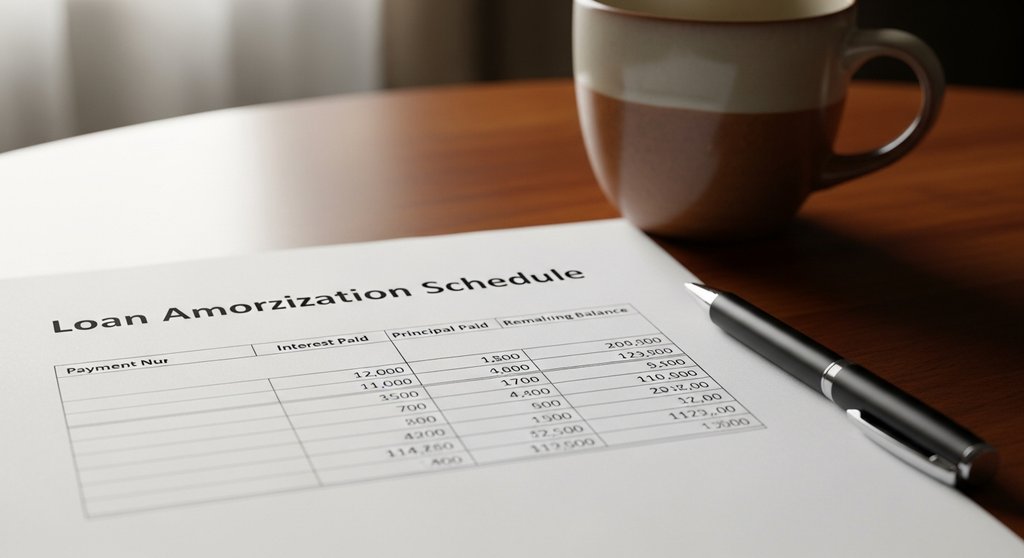
This is exactly the scenario a loan amortization calculator helps you map out side by side. Run both schedules, the old loan carried to term and the new loan, then compare total interest paid. The monthly savings figure alone is not enough information to make the decision.
Shorter Terms Change the Equation Entirely
One refinance strategy that does hold up under scrutiny is shortening the loan term. Refinancing from a 30-year into a 15-year loan typically comes with a lower rate and a dramatically smaller total interest bill, even though the monthly payment rises.
Using the same $356,000 balance from the example above, a 15-year loan at around 6.0% would carry a payment roughly $700 higher per month than the original 30-year. That hurts in the short run. But total interest over 15 years would be approximately $188,000, compared to $450,000 or more over the remaining 25-plus years on the old schedule. The difference is staggering when you see the full amortization tables laid out.
What to Plug In Before You Call Your Lender
Before any conversation with a lender, gather four numbers: your current remaining balance, your current interest rate, the offered new rate, and the quoted closing costs. Then model both scenarios using a loan amortization calculator to generate full payment schedules for each option.
Look at three outputs specifically. First, the total interest paid under each scenario. Second, the month-by-month principal balance so you can see how fast each loan actually pays down. Third, the break-even month, which you calculate by dividing total closing costs by the monthly payment difference. If you plan to sell or move before that month, the refinance is a net loss regardless of the rate.
Rates are still high enough that even modest dips feel significant. But the refinancing decision is really about time horizon, upfront costs, and whether you want a shorter or longer payoff window. The rate is just one input.