
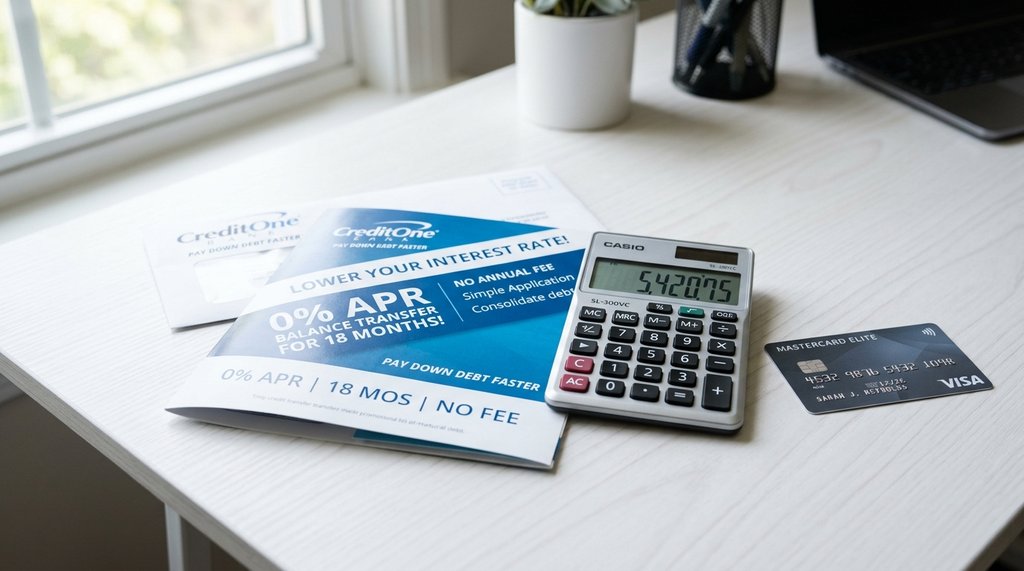
Balance Transfer Math: When a Lower APR Actually Saves Nothing
A lower APR on a balance transfer sounds like a no-brainer, but the math is more complicated than the promotional flyer suggests.
The 0% Offer That Can Still Cost You Hundreds
Balance transfer cards love to advertise a 0% introductory APR for 12 to 21 months. The pitch is simple: move your high-rate debt here, pay nothing in interest, escape. But almost every transfer comes with a fee, typically 3% to 5% of the amount moved. On a $6,000 balance, that is $180 to $300 upfront, paid immediately.
If your current card charges 22% APR and you carry that $6,000 for 12 months making only minimum payments, you pay roughly $1,100 in interest. A transfer fee of $300 still saves you $800. Clear win. But what if the intro period is only 6 months, or your current rate is 17%, or you plan to pay the balance off in 4 months anyway? Suddenly the fee erases most or all of the benefit, and you have also opened a new account, which can ding your credit score.
What Happens When the Promotional Clock Runs Out
The promotional period ending is where many people get caught off guard. Any remaining balance after the intro period reverts to the card's standard APR, which for balance transfer cards averaged around 24% to 26% through mid-2026, according to Federal Reserve consumer credit data. That is often higher than the card you left. Try the credit card APR calculator to see your own numbers.
The scenario plays out like this: you transfer $5,000, pay $200 a month, and after 15 months you still owe around $2,000 when the clock runs out. That remaining debt now sits at a punishing rate, and the interest savings from the first year get partially clawed back over the following months. The only safe transfer is one where you can realistically clear the full balance before the promotional rate expires.
Using a credit card APR calculator to model both timelines, before and after transfer, is the clearest way to see whether the math actually works in your favor. Punch in the fee, the intro period length, and your realistic monthly payment, not an optimistic one.
Three Scenarios Where Skipping the Transfer Wins
First: if you can pay off the balance within 3 months regardless, the transfer fee almost certainly costs more than the interest you would have paid. Second: if your current card's APR is already below 18%, the spread between your rate and the post-promo rate is narrow enough that the fee math rarely works out. Third: if you have a history of accumulating new charges on old cards after transferring the balance, you end up with two balances growing at high rates instead of one.
Card issuers are not running these promotions as a favor. They are betting a meaningful percentage of customers will carry a balance past the intro period, or will use the freed-up credit limit on the old card and end up deeper in debt overall. Consumer Financial Protection Bureau research has consistently shown that people underestimate how long it will take them to pay down transferred balances.
How to Run the Numbers in Under Two Minutes
The calculation is not complicated, but it has enough moving parts that doing it in your head leads to mistakes. You need to account for the transfer fee as an effective interest cost, model the payoff timeline against your real monthly payment amount, and compare total cost paid on both the old card and the new one.
A credit card APR calculator handles all of those inputs at once, giving you a side-by-side look at total interest paid under each scenario. Run your current card first with your actual payment amount, then model the transfer scenario including the fee added to the balance. If the new total is lower and you can commit to clearing the balance before the intro period ends, the transfer makes sense. If it is a wash or a loss, save yourself the credit inquiry and stay put.