
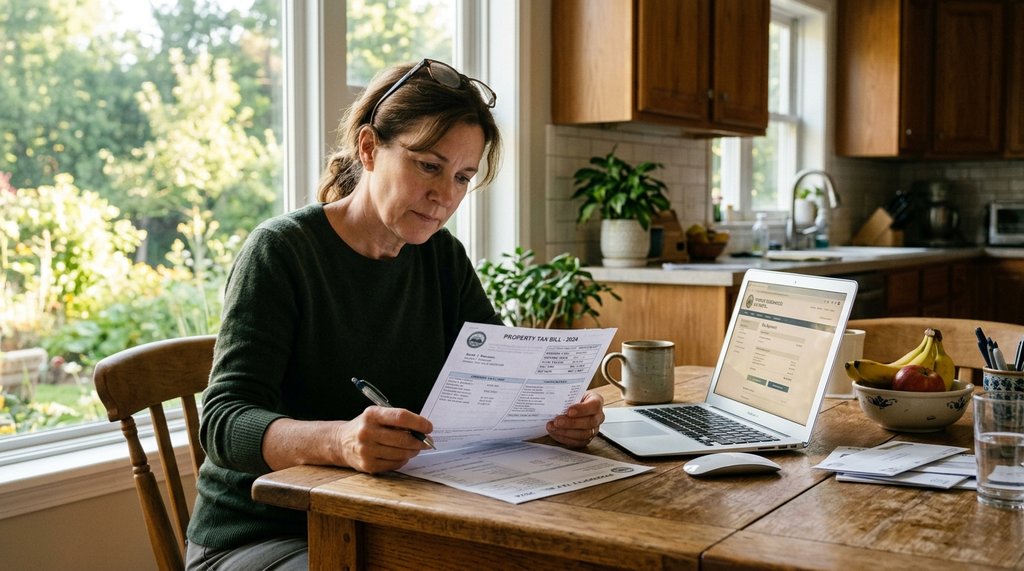
Why Your Property Tax Bill Jumped This Year (And What to Do About It)
Millions of homeowners opened their property tax bills this fall and felt their stomach drop, and most of them have no idea why the number changed so much.
Assessed Value vs. Market Value Is Tripping People Up
The most common misconception about property taxes is that they track your home's sale price directly. They do not. Local assessors apply their own valuation methods, and many counties are still catching up to the home price surges from several years back. That lag means some neighborhoods are only now seeing reassessments that reflect 2022 and 2023 peak prices, even though the market has since cooled.
Your tax bill equals your assessed value multiplied by your local mill rate, minus any exemptions you qualify for. A home assessed at $420,000 in a county with a 1.2% effective rate owes $5,040 before exemptions. If that same home was reassessed upward by 18% this cycle, the bill jumps to roughly $5,947. That is nearly $1,000 more annually, and most homeowners never saw it coming.
How Homestead Exemptions Can Cut That Number Significantly
Homestead exemptions are legal deductions from your assessed value available to primary residents, and a surprising number of eligible homeowners simply never file for them. A $50,000 homestead exemption in the scenario above drops the taxable base from $420,000 to $370,000, saving around $600 per year at that same 1.2% rate. Try the property tax estimator to see your own numbers.
Senior freezes, veteran exemptions, and agricultural classifications can reduce bills even further. The catch is that many of these require annual renewal or a one-time application that lapsed during a move or refinance. Checking your county assessor's website in September, before most appeal deadlines close, gives you time to file before the next billing cycle locks in.
Running the Numbers Before You Refinance or Sell
Property taxes are often the hidden variable that wrecks a refinance calculation. A homeowner refinancing from a 7.1% rate to a 6.3% rate might save $180 a month on principal and interest, but if their escrow adjustment adds $95 a month due to a reassessment, the actual payment drop is far smaller than expected. Lenders are required to estimate escrow accurately, but those estimates are only as good as the most recent tax data on file.
Anyone buying, selling, or refinancing right now should get a current tax estimate before signing anything. A property tax estimator takes your assessed value, local mill rate, and applicable exemptions to give you a clear annual and monthly figure. Plugging in a few numbers takes under two minutes and can prevent a very unpleasant escrow shortage notice six months after closing.
If you are selling, buyers are going to scrutinize the tax line on their loan estimate. A realistic, current figure strengthens your listing rather than creating a surprise that kills a deal in underwriting.
When to Appeal and How to Start the Argument
You have the right to contest your assessment if you believe it does not reflect your property's actual value. The burden of proof is on you, but it is easier than most people think. Pull three to five recent sales of comparable homes within a mile radius and no more than six months old. If those comps average $390,000 and your home is assessed at $435,000, you have a credible case.
Most counties hold informal hearings before formal appeals, and many assessors will adjust the value without a fight if you show up with solid data. Deadlines vary widely, from 30 to 90 days after your assessment notice arrives, so check your county's calendar immediately. A successful appeal on a $435,000 overassessment in a 1.2% rate county saves you roughly $540 per year, every year, until the next reassessment cycle.