
What Counts as an Emergency Fund Expense (and What Does Not)
Most people know they need an emergency fund, but far fewer agree on what actually counts as an emergency.
The Expenses Most People Mistakenly Call Emergencies
A vacation sale, a leaky roof you knew about for two years, Christmas gifts, and a car registration fee are not emergencies. They are predictable expenses that belong in a sinking fund, not your emergency reserve. Raiding your emergency savings for these things leaves you exposed when a true crisis hits.
The clearest definition of an emergency expense is something sudden, necessary, and beyond your control. A job loss, an unexpected medical bill, or a burst pipe at midnight qualifies. A new couch because your old one wore out does not. Keeping that line sharp is what makes the fund work.
Why Mixing Up the Definition Leaves You Perpetually Underfunded
If you treat your emergency fund as a general backup account, you will spend it down faster than you can rebuild it. Say you keep $8,000 saved. You pull $1,200 for a holiday trip, $600 for a car repair you could have anticipated, and $400 for a home appliance upgrade. Suddenly you are sitting at $5,800 when an actual emergency, like a two-month gap between jobs, arrives. Try the emergency fund calculator to see your own numbers.
A two-month income gap for someone earning $4,500 per month means you need $9,000 just to cover rent, groceries, utilities, and minimum debt payments. Starting that crisis with $5,800 is a very different situation than starting it with $8,000. The math is unforgiving.
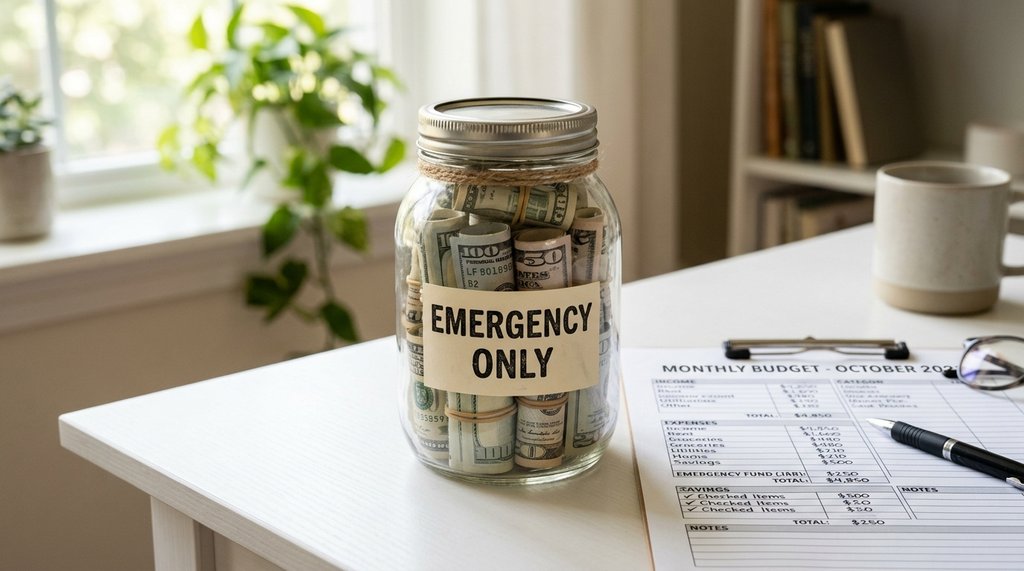
This is why financial planners often recommend a separate, clearly labeled high-yield account for your emergency fund. Physical and psychological separation reduces the temptation to dip in for non-emergencies.
How to Calculate the Right Target for Your Actual Risk Profile
The standard advice of three to six months of expenses is a starting point, not a finish line. The right number depends on your job stability, whether you have dependents, your health situation, and how much of your income is variable. A freelancer with one major client and two kids needs a much larger cushion than a tenured employee with a working spouse.
Use an emergency fund calculator to plug in your real monthly expenses, including housing, food, insurance premiums, and minimum debt payments, rather than your income. Many people overestimate their target by using income instead of expenses, which inflates the number unnecessarily and makes the goal feel out of reach.
Once you know the target, treat the account as off-limits except for the qualifying scenarios above. Label the account something specific in your banking app, even just "True Emergencies Only," to create a small friction point before you transfer money out.
Building the Fund Without Stalling Your Other Goals
A common mistake is pausing all investing or debt paydown until the emergency fund is fully funded. That can take years, especially if the target is $15,000 or more. A better approach is to build a starter fund of $1,500 to $2,000 first, which covers most minor crises, then split future savings contributions between the emergency fund and other priorities.
Automatic transfers help most people stay consistent. Even $100 per paycheck adds $2,600 over a year without requiring willpower. Once the fund hits its target, redirect those transfers to your next financial goal.